

AI and Robotics Are Here to Help Us Feel More Human
There’s a persistent fear that automation in healthcare means fewer human hands caring for patients. In practice the opposite is true. Robotics isn’t here to replace the human connection at the heart of care – it’s here to protect it.
At Caterlink our philosophy has always been simple: technology should improve efficiency so that people can focus on what they do best. Empathy and emotion cannot be automated. But the tasks surrounding care, including heavy lifting, repetitive strain, logistics and administrative bottlenecks, can and should be automated. This can help staff dedicate more time to residents and support compliance with requirements such as the 215 minutes of care per resident per day in residential aged care.
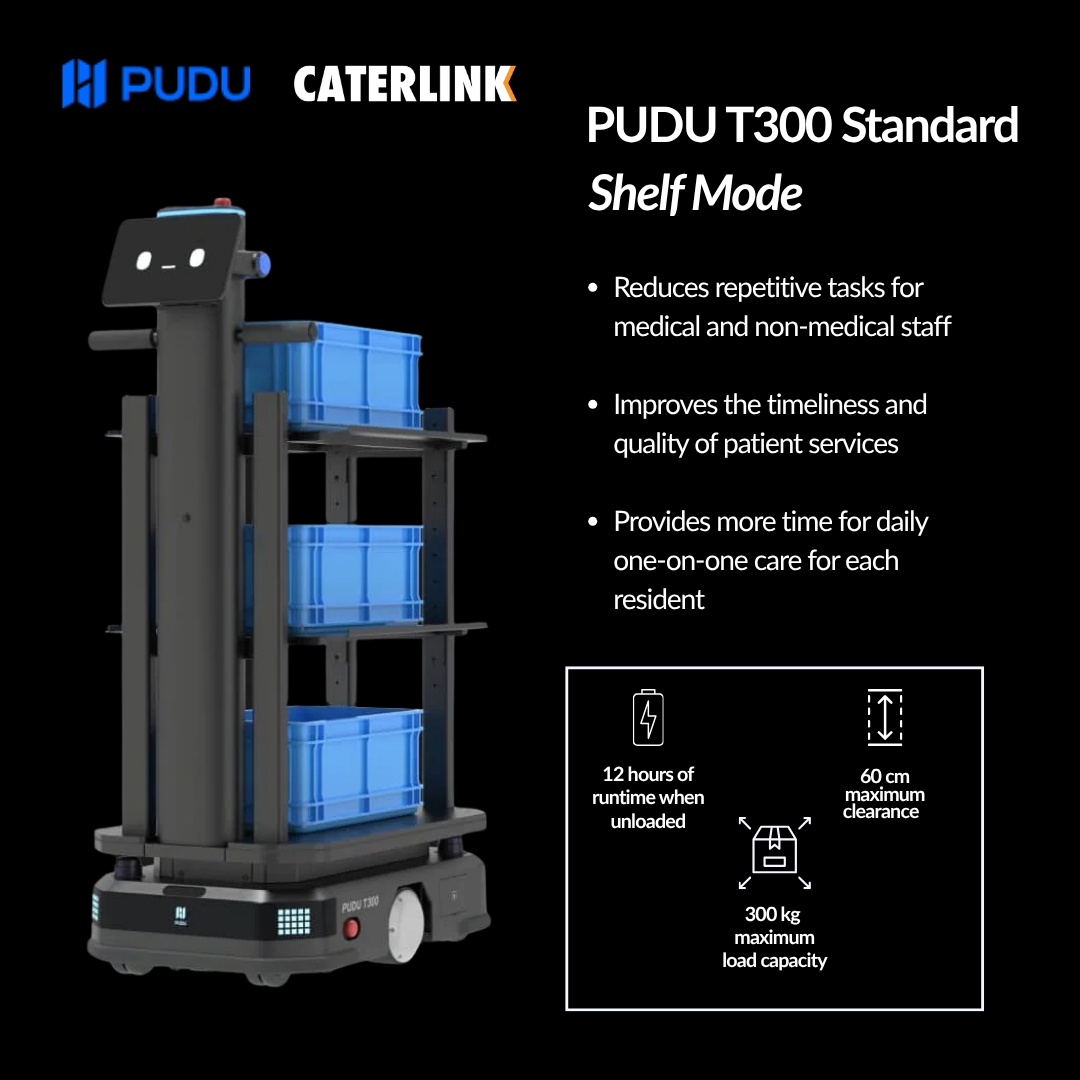
PUDU Delivery Robot (Shelf Mode): 300 kg maximum load capacity, 60 cm maximum clearance and up to 12 hours of runtime when unloaded.
Take heavy-load transport. Hospital staff routinely move linens, supplies and equipment across long corridors and multiple floors, often under time pressure. Robots with a carrying capacity of up to 300 kg now handle this work, reducing manual handling injuries and freeing clinical staff to spend that time with patients instead. With the follow me function the T300 can also be used to follow a staff member around assisting with tasks (cobotics) such as delivering or clearing meals and be sent or called back to kitchen areas. This particular robot can be fitted with multiple options suited to various tasks ensuring it can be utilised throughout the day. Robotics can also apply to reception and wayfinding services, where automation improves timeliness without removing the human welcome that matters most on arrival.
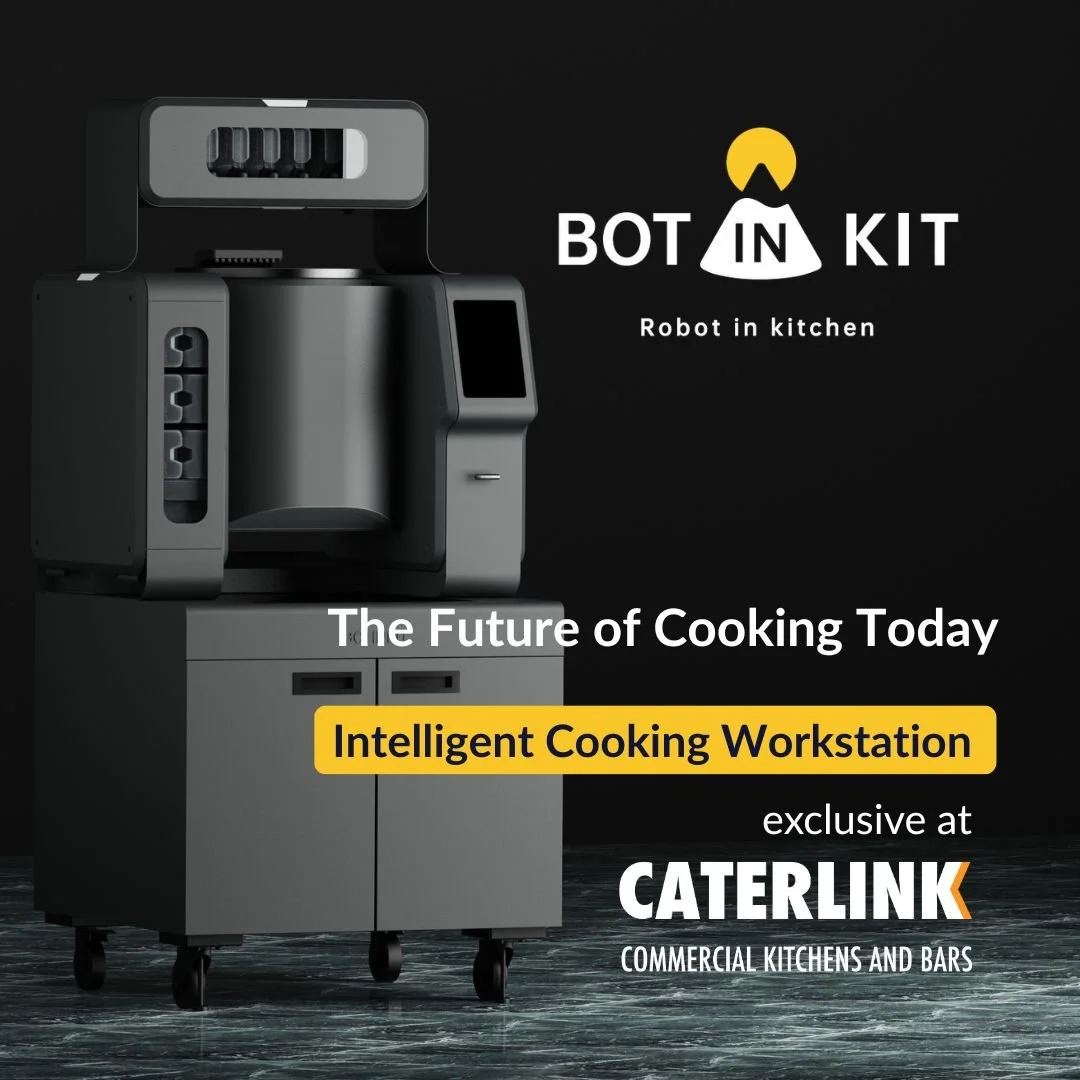
Botinkit: intelligent cooking workstation
Hospital kitchens are also demanding environments, with staff managing heat, labour shortages and pressure during peak service periods. Botinkit automates labour intensive and hazardous cooking tasks, helping to reduce kitchen temperatures, improve workplace safety and allow air conditioning to operate more efficiently. It also supports consistent meal quality across multiple facilities, with precise control over recipes, ingredients and sodium levels to help meet dietary and compliance requirements. Faster staff training, reduced food waste, improved hygiene and more reliable peak-hour service further contribute to safer and more efficient healthcare kitchens.
Digital transformation in healthcare shouldn’t stop at the patient’s bedside. It starts in the kitchen, the corridor, and the reception desk –everywhere that freeing up human time means giving more of it back to human care.
To explore how these innovations can support your facility, or if you are seeking greater efficiency and automation solutions, contact Sarah Monaghan to arrange a free consultation and live equipment demonstration.
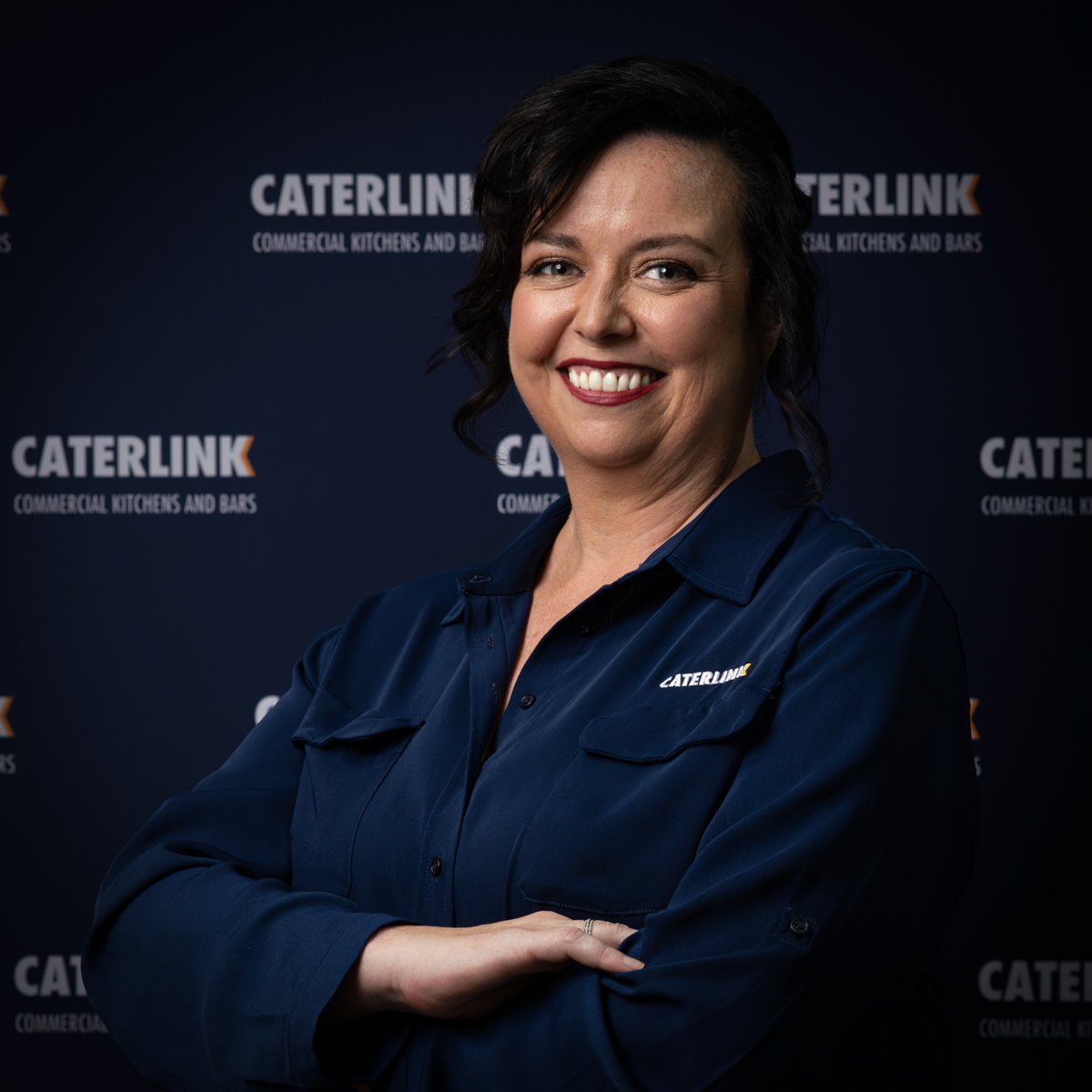
Sarah Monaghan
Sales Manager - Eastern States
Caterlink
M: 0414 519 896