

Using more dairy can make a difference in protecting against malnutrition

We all recognise that providing good sources of nutrition for residents in aged care can have significant impact on their health. As our bodies age, our requirements for certain nutrients increase – for example protein, calcium and vitamin B2. All these, however, are provided in milk and yoghurt – making them a great fit on the aged care menu.
“Most people know dairy is a source of calcium and protein which is important for bone health and muscle maintenance respectively, but milk and yoghurt contain many other essential nutrients,” points out Jennifer Arguelles, an Accredited Practising Dietitian and Senior Nutritionist at Bega Foodservice.

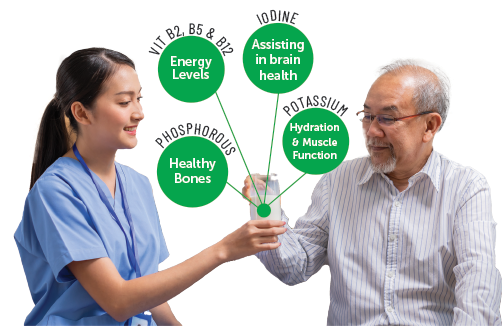
“These include iodine which can help with brain health, phosphorous which is beneficial for bone maintenance, vitamins B2, B5 and B12 which assist with energy delivery, and potassium which is important for hydration and contributes to muscle function.”
Last year’s Aged Care Catering Summit held during the Foodservice Australia tradeshow in Sydney highlighted not only how 68 per cent of residents living in aged care are either malnourished or at risk of malnutrition, but also the fact that it costs two to three times more to look after a malnourished resident. And when residents are malnourished, they’re more susceptible to falls, fractures and infections which obviously can increase their care needs.
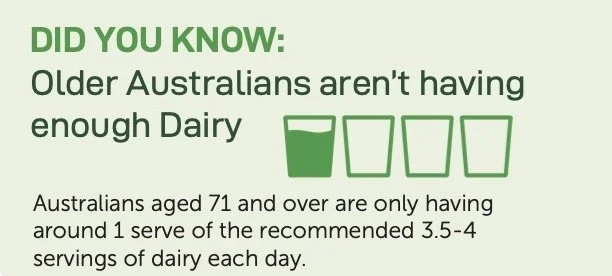
A two year study conducted across 60 Victorian aged care facilities and 7,195 residents has demonstrated the benefits of dairy in protecting against these concerns. Led by Dr Sandra Iuliano, senior research fellow in the Department of Medicine at the University of Melbourne, it tested the effects of increasing dairy intakes from around 2.5 serves per day to greater than three serves per day. Results showed
* 33 per cent reduction in all fractures
* 46 per cent reduction in hip fractures
* 11 per cent reduction in falls
“Yoghurt and cheese are also ideal dairy ingredients to fortify foods – like sprinkling Dairy Farmers Shredded Cheese on top of casseroles, pastas or bread. You can also offer residents snack and mealtime options like Yoplait, Fruche or Dairy Farmers Thick and Creamy Yoghurt. There’s not much nutrition in a sweet biscuit at morning tea, but having cheese with crackers or some yoghurt instead can make a real difference in improving someone’s nutrient intake per sitting. And of course ice cream, custard or yoghurt makes a great addition to any dessert. Dairy Farmers has single serve custards which have been developed specifically with the high energy and high protein requirements of aged care residents in mind.”
For more information on the Bega range of products available to aged care visit www.begafoodservice.com.au, phone 1800 000 570 or email orders@bega.com.au
* Iuliano S, Poon S, Robbins J, Bui M, Wang X, De Groot L et al. Effect of dietary sources of calcium and protein on hip fractures and falls in older adults in residential aged care: cluster randomised controlled trial BMJ 2021; 375:n2364 doi:10.1136/bmj.n2364.
* Baek Y, Iuliano S, Robbins J, Poon S, Seeman E, Ademi Z. Reducing hip and non-vertebral fractures in institutionalised older adults by restoring inadequate intakes of protein and calcium is cost-saving. Age Ageing. 2023 Jun 1;52(6):afad114. doi: 10.1093/ageing/afad114.