
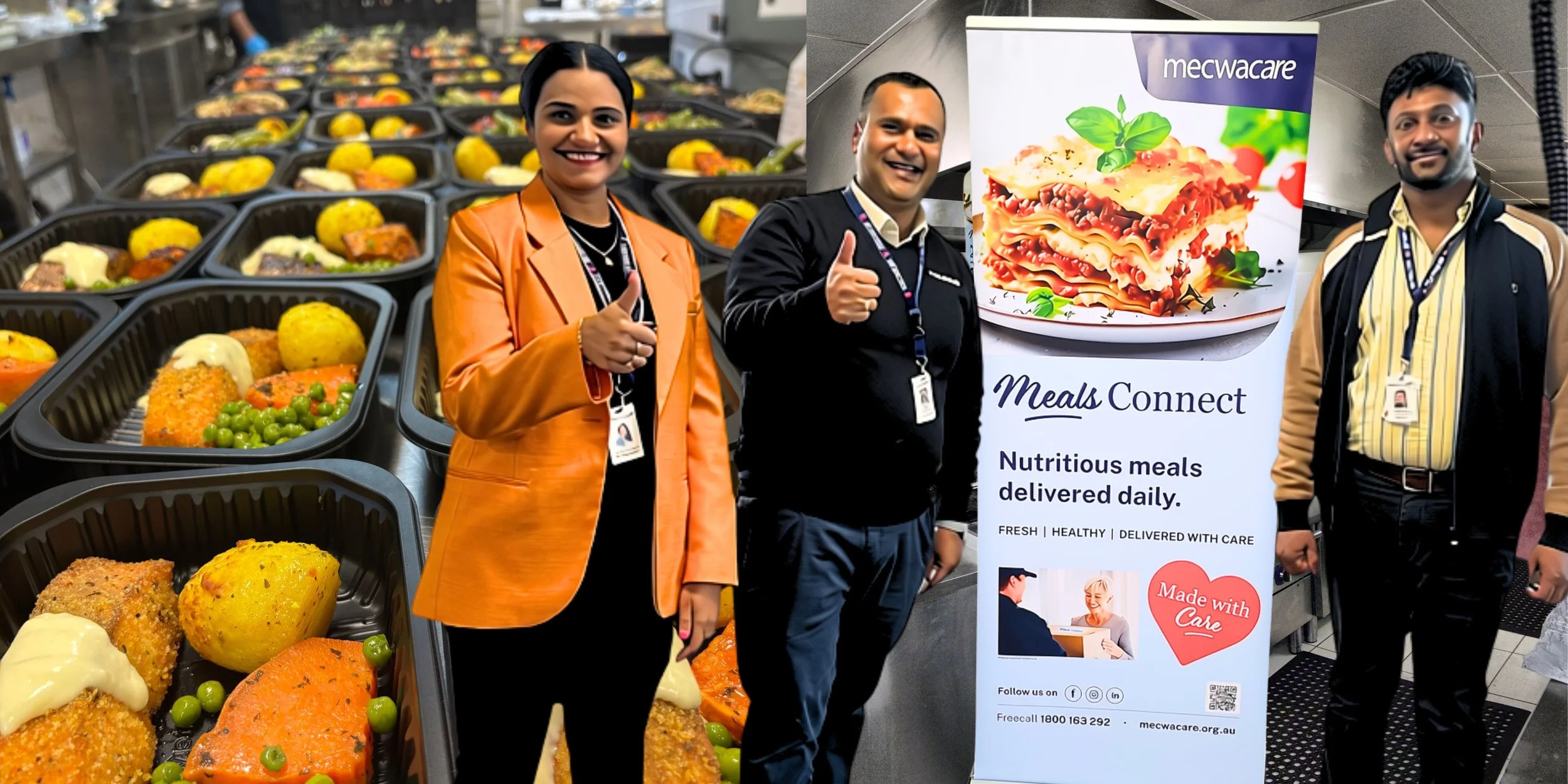
New Meal Connect Project set to revolutionise Mecwacare’s meal delivery services

As Manager of Hotel Services, Client Experience and Growth at Mecwacare, Dinesh Subramani leads the hospitality workforce for one of Victoria’s largest not for profit care providers. Mecwacare operates across aged care, retirement living, community centres and support at home and Dinesh has been with the business for 22 years, and in his current role for four.
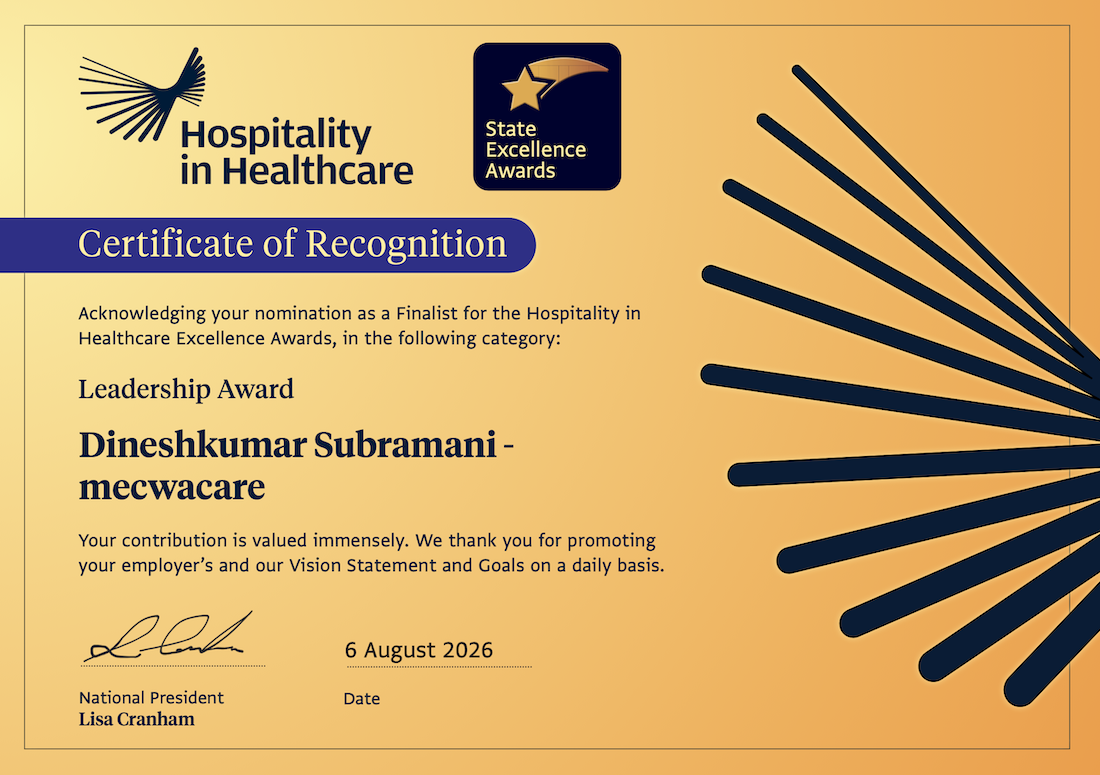
Last month Dinesh received the Hospitality in Healthcare Vic/Tas State Excellence Award for Leadership, in part for his role in spearheading the Mecwacare Meal Connect project which is set to revolutionise its foodservice delivery across multiple sites.
The impetus for the project was Dinesh’s goal of eliminating inconsistencies in food quality, presentation and costs across Mecwacare’s residential aged care facilities. Each site had been operating independently, with different menus, standards and approaches and Dinesh identified the benefits of moving to a centralised meal production model – which could also be used to provide meals for Mecwacare’s support at home service.
“I went to my executive team and submitted a business case then had to make a presentation,” Dinesh recalls. “It was all about demonstrating how the new model would give us more control and consistency in the foodservice production and delivery, and importantly, more choices for our residents, which improves their satisfaction with the service we’re providing.”
The road to implementation was long and involved – “it has taken almost 16 months from the initial business case to now and we have had a few delays along the way,” Dinesh says. “Mecwacare has recently undergone a digital transformation to a new operational model called Mecwacare 360, and we recognised it was wise to hold off until this was in place because it has made it easier to manage our client data across multiple sites. With that in place, we are now planning to launch the new centralised food production services, initially for delivery to our retirement villages, then by next February to support at home as well.”
“We are using the cook-chill and cook-freeze processes and I had to work closely with my food auditor to check all the food safety concerns, then we needed to write a food safety plan, then someone else was involved with identifying what food testing had to be done”
Dinesh explains Meal Connect will operate out of a series of ‘hubs’ – centralised production kitchens servicing designated parts of Victoria. “We are going to start with Richmond, which will cover our CBD division, then another hub for Bacchus Marsh/Ballan which will service right out to Ballarat and as far as Bendigo, hub three will be at Shoreham for the Morningside Peninsula and hub four will be in Box Hill.”
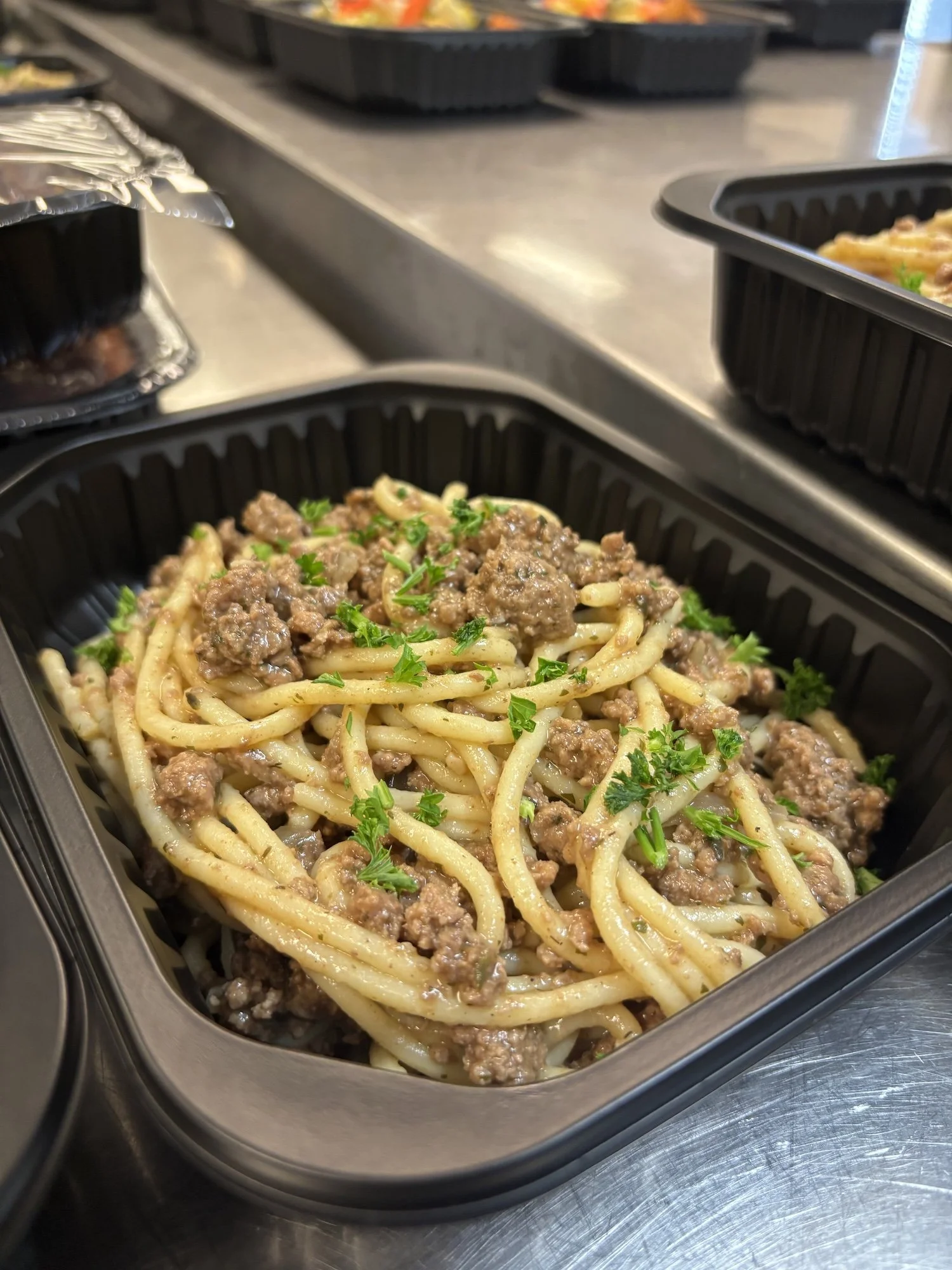
Each of the four initial hubs will produce identical menus from the same recipes, with further hubs set to be introduced as the Project scales up. “Rather than have one centralised production kitchen, we recognised we needed to go with the hub model – which necessitated new fitouts for all these hub kitchens so they could produce uniform meals,” Dinesh says.
Getting the project underway required Dinesh to conduct comprehensive site assessments, consult with chef managers to understand operational challenges, collaborate with dietitians on nutritional requirements and work with finance and budget teams.
“It has been a big job, right from the initial challenges of identifying what equipment we needed and doing the first food testing,” Dinesh remembers. “We are using the cook-chill and cook-freeze processes and I had to work closely with my food auditor to check all the food safety concerns, then we needed to write a food safety plan, then someone else was involved with identifying what food testing had to be done … it was a constant process of meeting with people and visiting multiple kitchens. Luckily I found a few people who were extremely helpful and would happily welcome me into their kitchens so all this could be put together.”
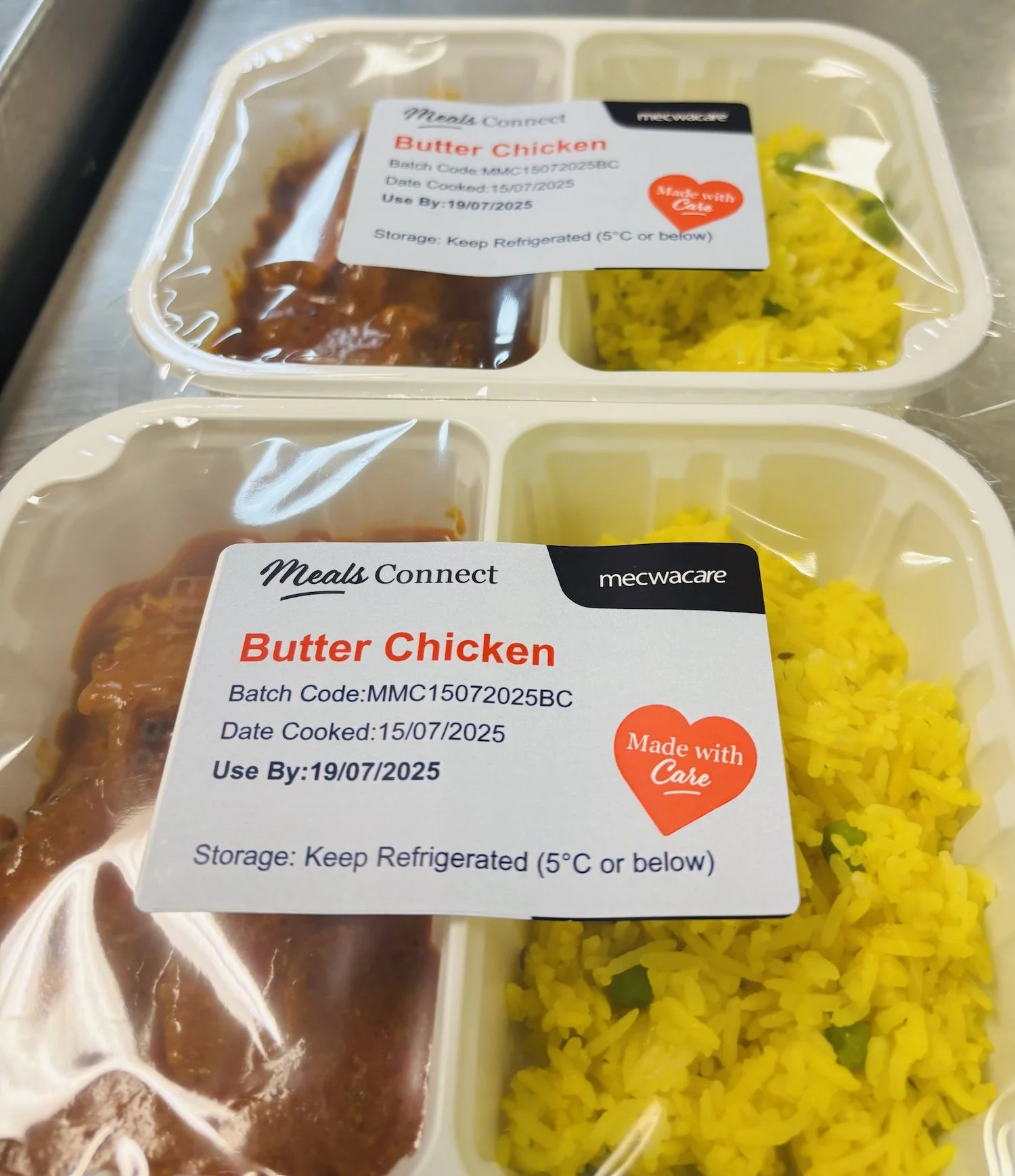
As the meals need to be delivered to Mecwacare’s sites once produced, packaging was also a key concern. “I was very confident about our ability to produce 10,000 meals but they also needed to be packed and transported safely, which is a big responsibility in itself, so it was quite challenging to get those ground rules set up,” Dinesh says. “But finally it all came together – we had to choose the packaging very carefully because it needs to be safe for the client when it comes into their house as part of home support and they put it into the microwave to heat. We also had to work out the best choices for the pack labelling stickers.”
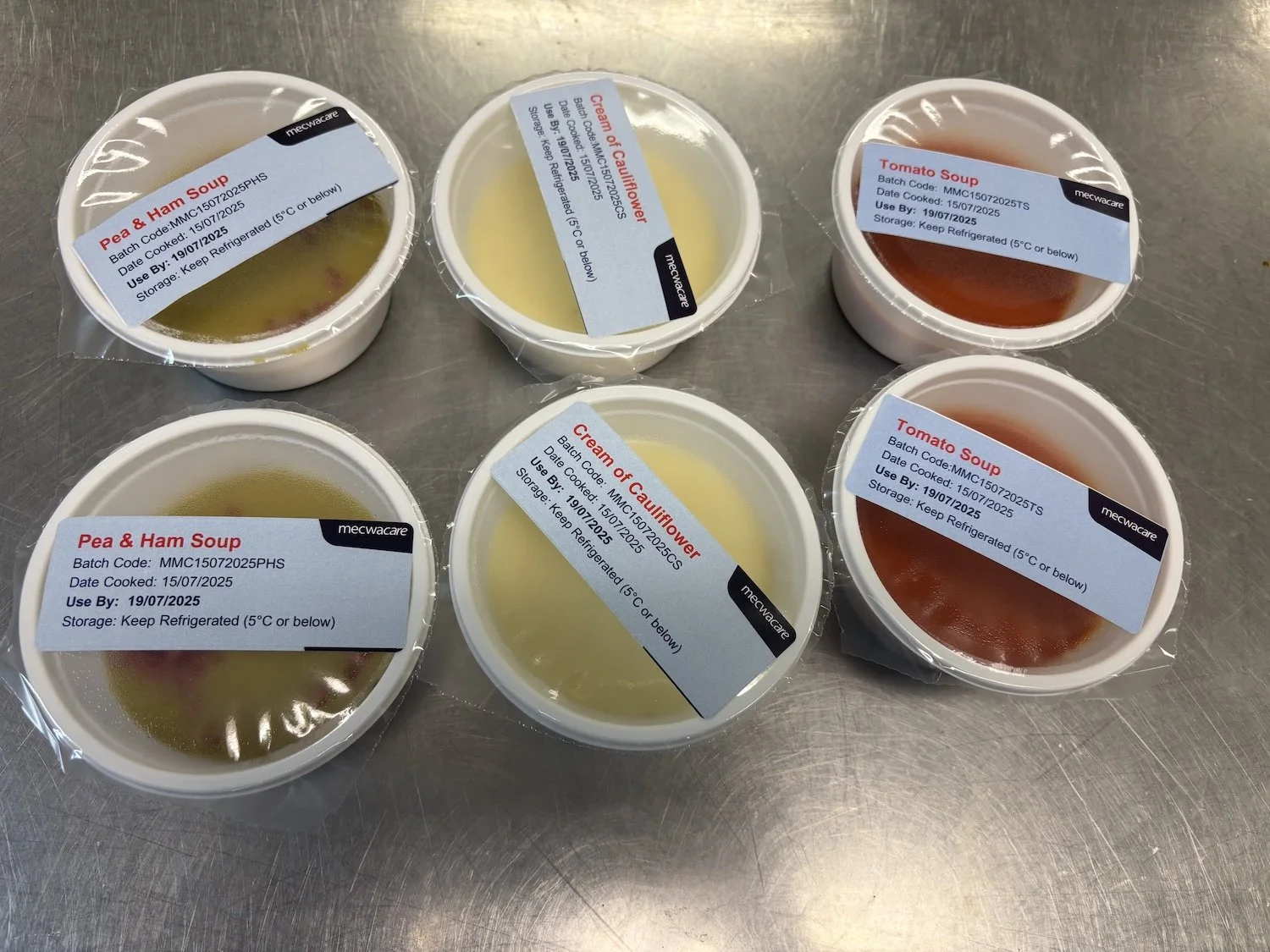
Eventually it was time for Dinesh to call in various stakeholders within the business to sample the new menus themselves. “I put six microwaves around the room and asked people to pick a meal and trial it for themselves – we had butter chicken, Thai curry, roast chicken, roast beef and those meals all went into the microwaves and we had very good feedback. We were getting their impressions not only of the food itself but the packaging, the heating instructions on the labels – each part of the process. We also sent about 50 packets of food around the office and asked everyone to taste and the response was amazing. Now I can’t wait to start and get everything rolled out!”
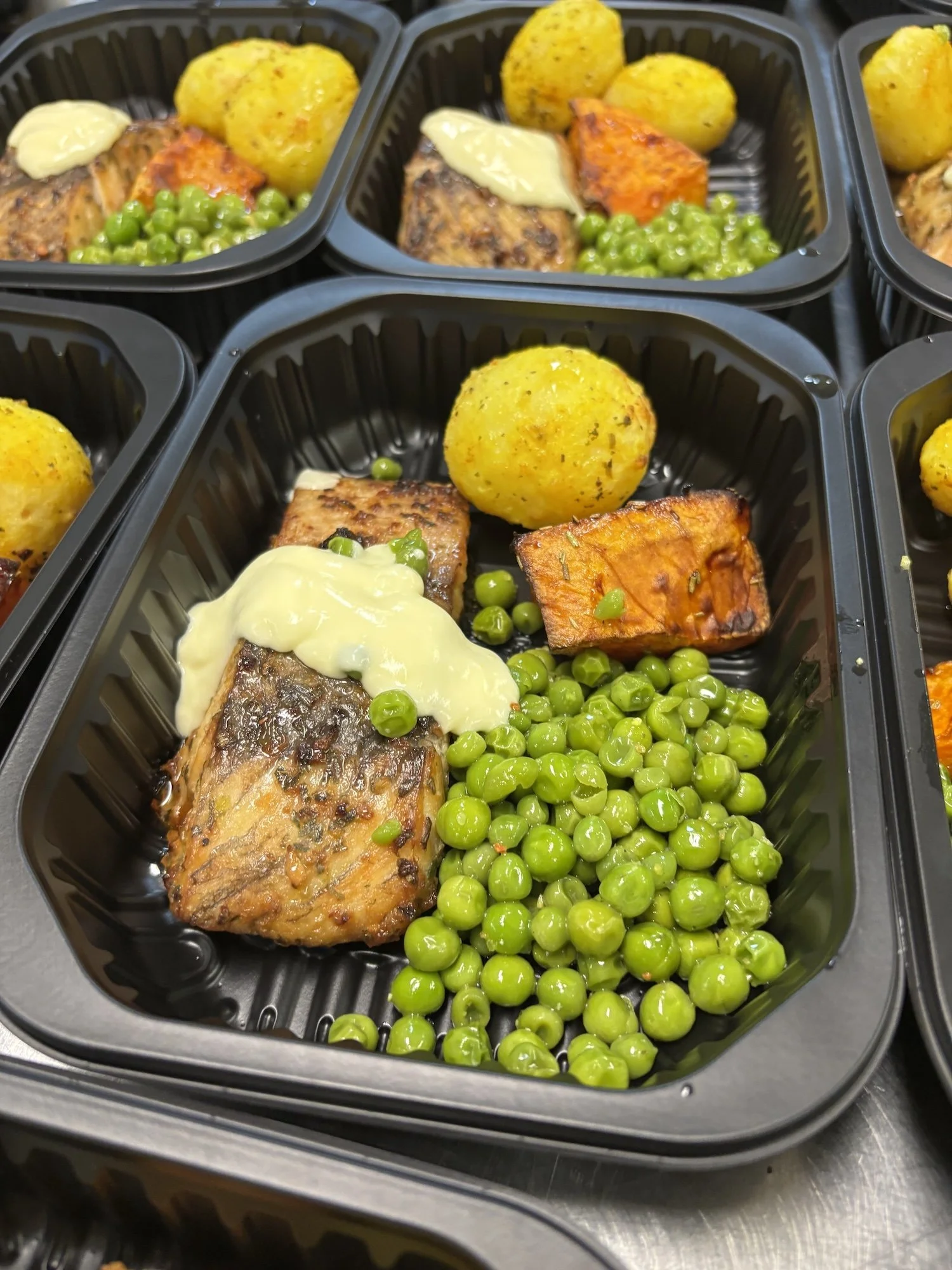
The innovative approach is expected to deliver not only improved meal consistency and quality but better cost control through economies of scale, enhanced food safety compliance and elevated dining experiences for Mecwacare’s residents and clients.
Looking back at the long road to the project’s implementation, Dinesh says, “It was not easy, but it’s rewarding to see it come to fruition. I’ve always been passionate about food but this project has given me even more focus – as a result of it I ended up doing a Certificate 4 Food Science and Tech along with a short course in cook-chill. And the fact we’re able to supply these meals as part of support at home is a definite plus, given the government’s expectations of growth in demand in this area – I recently saw a government report showing that by 2032 there is an expectation that we will have many more people accessing the support at home packages.”
Dinesh also pays credit to Mecwacare’s staff, executive team and CEO for their support during the process. “Everyone was great – whenever I approached them they were very helpful, and several chefs worked closely with me in designing the menus. It was one of the most rewarding projects I’ve ever worked on and I’m very happy to be involved in it and looking forward to fully launching in February!”