

Food Allergy Conundrums: Wheat allergy and coeliac disease – clearing up the confusion
by Ingrid Roche *
Last time we talked about milk allergy and lactose intolerance and how staff, patients and residents might get a bit mixed up between the two. There is similar confusion in the community with wheat allergy and coeliac disease or gluten intolerance. The danger here is that someone with a life-threatening wheat allergy could be ordered the wrong diet type or given the wrong meal, or given a meal that hasn’t been adequately controlled for wheat contamination. Let’s have a closer look …
Here is what staff working in healthcare need to know:
About allergens in gluten and wheat:
Gluten is just one type of protein that is found in wheat, rye and barley, and other cereals that are bred from these grains (for example, triticale).
There are other proteins in wheat besides gluten that someone with a wheat allergy can react to. Some products labelled ‘gluten free’ might still contain other wheat allergens – so foods need to be checked carefully even if they are labelled gluten free.
About wheat allergy:
People with wheat allergy can have an immediate life-threatening reaction to any of the allergens in wheat, not just wheat gluten.
Staff should be trained to understand the difference between wheat allergy and coeliac disease so that the right diet type is ordered for them. The patient or resident needs to be documented in a paper or electronic system as having a wheat allergy.

Allergic reactions to wheat can be life-threatening
Food choices for wheat allergy:
People with a wheat allergy must completely avoid all foods, ingredients and products that contain wheat.
You must check for all wheat ingredients on a food label or product information form, even in foods that are labelled “gluten-free” – sometimes there are other ingredients from wheat in the food that don’t contain gluten but do contain other wheat allergens.
Check if the person is allergic to any other grains.
People with wheat allergy can eat wheat-free grains like rice, corn, buckwheat and millet, but they might also be able to eat other grains that contain gluten – such as rye, barley and oats, if they are not allergic to them.
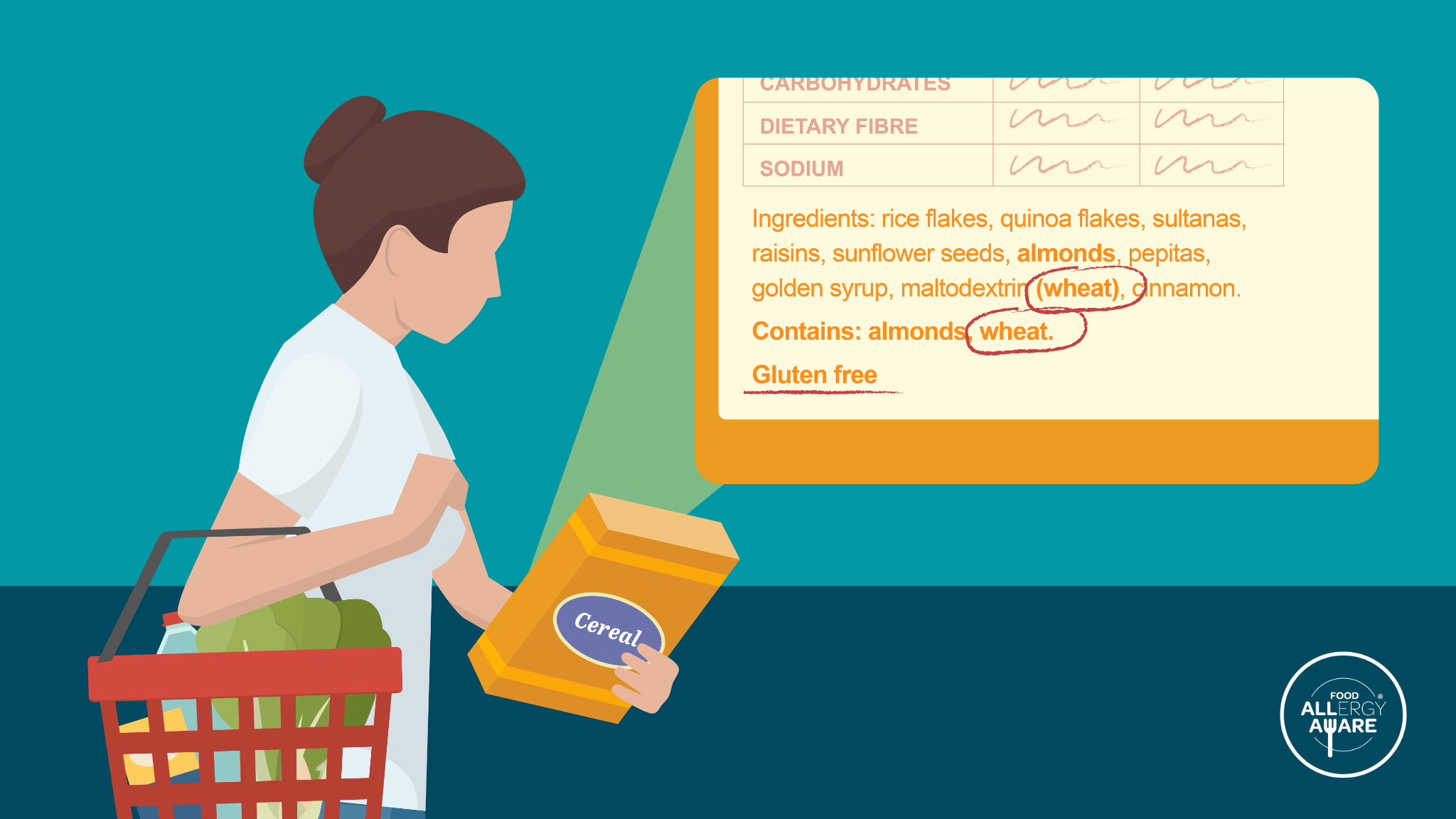
check labels carefully for wheat, even if the food is labelled ‘gluten free’
About Coeliac Disease:
Coeliac disease is a serious, lifelong autoimmune condition that is triggered by gluten. It is not a food allergy.
If someone with coeliac disease eats gluten, it will not cause a life-threatening reaction. But it can make people feel very unwell and cause gastrointestinal symptoms such as nausea, vomiting and diarrhoea. Eating gluten may cause serious long term health problems for someone with coeliac disease.
Food choices for coeliac disease:
Patients and residents with coeliac disease must avoid wheat, rye and barley and all cross bred grains that contain gluten. They must avoid all food products that contain gluten.
Oats have a protein that is very similar to gluten and some people with coeliac disease cannot eat oats. Oats are not allowed to be called ‘gluten free’ in Australia.
People with coeliac disease can eat grains that do not have gluten, like rice, corn, quinoa, millet and buckwheat.
Foods that are labelled ‘gluten free’ are OK for someone with coeliac disease.

people with coeliac disease will not have a life threatening reaction but eating gluten can make them very unwell
Catering for longterm patients and residents with wheat allergy or coeliac disease
Longterm patients or residents with wheat allergy or coeliac disease should be reviewed by a dietitian to make sure they are getting enough carbohydrate, energy, fibre and important vitamins and minerals which they miss out on when they cannot eat wheat or gluten containing grains. This is important for all age groups. Eating wheat alternatives based only on rice and corn does not always provide enough nutrition in the longterm – a bigger variety of other grains and legumes is needed for good health.
Electronic menu coding
Staff allocating diet types must be trained to know the difference between wheat allergy and coeliac disease to keep patients with these conditions safe.
Coding for wheat allergy:
All foods with wheat as an ingredient are coded as non-compliant
Foods with statements like ‘may contain wheat’ or ‘may be present: wheat’ statements should be coded as non-compliant to wheat allergy.
Coding for coeliac disease:
All foods with rye, oats, barley or wheat are coded as non-compliant.
Foods with ‘may contain gluten’ or ‘may be present: gluten’ are non-compliant.
Coding for gluten intolerance:
Patients or residents who report they are gluten intolerant should be asked if they have wheat or other grain allergies, or if they have coeliac disease, to make sure the diet type selected for them is safe.
To make it easier for food services to manage, code foods for gluten intolerance the same as those for coeliac disease.
Making safe meals
To prevent a life-threatening reaction, patients and residents with wheat allergy must completely avoid all foods that contain wheat. Meals must be made in a way that prevents cross contamination of wheat to their food.
Ingredients of all foods should be checked before preparing the meal to make sure wheat is not an ingredient and that there are no ‘may contain’ statements for wheat.
Do not use something that says ‘contains wheat’ or ‘may contain wheat’ either on the label or on the product information sheet.
The food should be made in a way that prevents cross contamination of wheat to the food allergy meal (clean equipment, good personal hygiene and freshly opened ingredients).
People with coeliac disease need to avoid gluten with this same strict avoidance approach to keep them healthy. Check all ingredients for gluten, do not include foods with ‘may contain gluten’ statements and prevent cross contamination of their meal with gluten.
And as always, check that the right person gets the right meal!

make sure meals don’t have wheat or gluten ingredients or cross contamination for patients and resident with wheat allergy or coeliac disease
Need a quick refresher for staff on wheat allergy and coeliac disease?
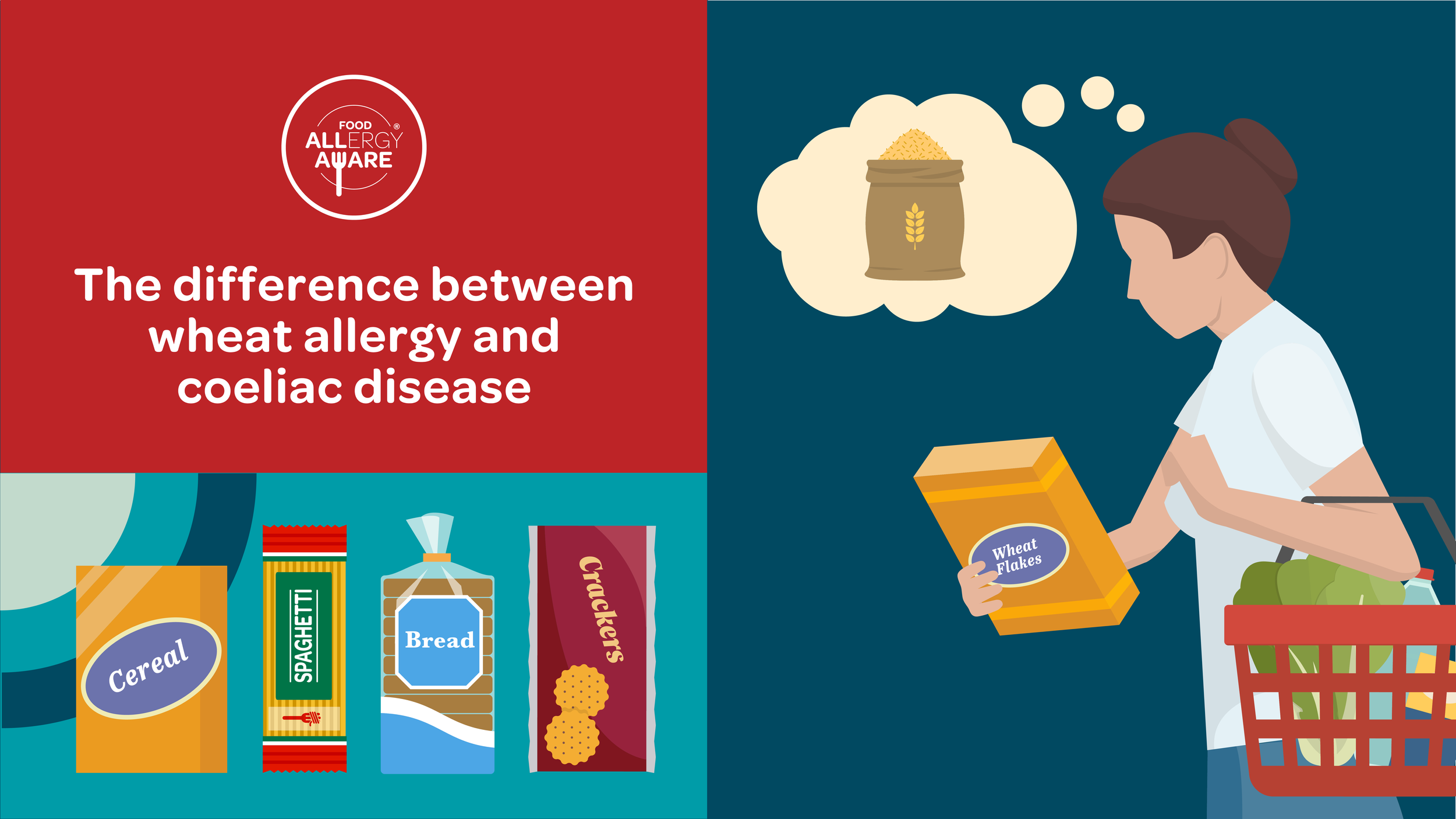
See our video page for our two-minute animation we made with Coeliac Australia: ‘The difference between wheat allergy and coeliac disease’
Do you have any questions or comments about our article, or do you want to tell us how you manage food allergies in your facility to add to our best practice guidance? Contact us at info@nationalallergycouncil.org.au
Subscribe to the National Allergy Council newsletter for all the latest project updates: https://nationalallergycouncil.org.au/news#sub
* Ingrid Roche is a National Allergy Council Senior Project Officer leading the National Allergy Council’s Food Service Program, and an Accrediting Practicing Dietitian specialising in food allergy and food allergen management in food service