

Food Allergy Conundrums: Keeping food allergen info up to date in your system
by Ingrid Roche *
Safe food allergy care starts with reliable information. Keeping patients and residents with food allergies safe requires constant monitoring of patient needs, menus, ingredients and processes. Electronic menu systems are valuable tools but menu options only remain safe while the data within the system is accurate.
Allergen information can become unreliable when everyday changes occur, such as:
A supplier provides a different product.
The manufacturer changes a product resulting in a different allergen profile.
For unpackaged products without a label, the product information on file is no longer up to date.
A kitchen process changes, introducing an allergen cross contamination risk.
From recent foodservice workshops focusing on allergen management, teams have shared practical approaches that can help keep information in their systems up to date:
Allocate dedicated staff time to update the information in the electronic or paper-based system – this is an important routine task.
In an ideal world, labels or product information forms would be checked every time an item is delivered and ingredient or allergen discrepancies identified. If this is not practical, implement a regular product audit schedule so every product is checked against system information at least every three months.

Following standard recipes and checking ingredient information before starting is a final check of the system information.
Build ingredient checks into food preparation. A final check before preparing menu items gives staff a further opportunity to confirm the relevant allergen is not present, especially if a product has not recently been checked on receipt or during an audit.
Encourage staff to speak up when something looks different, such as a product change or an ingredient that contains or may contain the relevant allergen. This is part of good food safety culture.
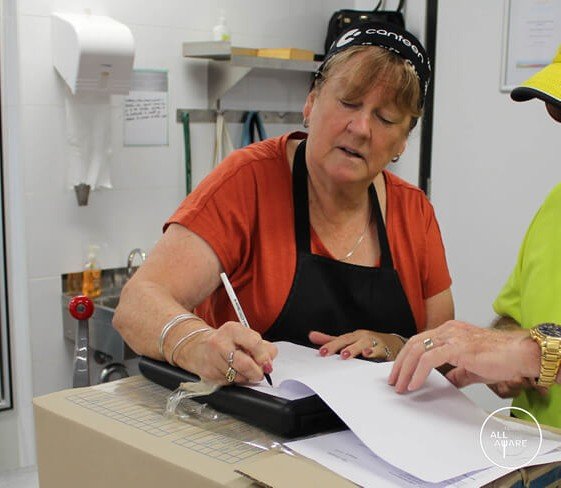
Checking foods on delivery and an ingredient audit schedule helps keep food up to date.
Make sure staff know who to notify when a product, ingredient list or allergen profile changes. Depending on whether the change is temporary or permanent, the service may need to source a suitable alternative product or update the system information.
Update downstream information such as allergen information about foods stocked in pantries or offsite facilities.
Check staff are following standard recipes and not substituting or adding ingredients.
Check preparation procedures are being followed to prevent allergen cross contamination between menu items.
What about patient or resident allergy information?
Patient and resident allergy information is just as important as product information. Whether your system is paper-based or electronic, allergy status needs to be easy to find, up to date, clearly documented and shared with nursing, care and food service staff.
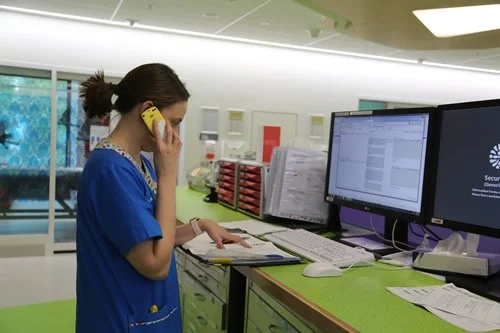
Information about patients or residents allergy status should be updated and shared to relevant staff.
Useful checkpoints include:
On admission
When diet types are entered into the system
When meals are ordered
When meals are being prepared
When meals are delivered or served
If a patient or resident’s allergy status changes, or if ingredient or menu item allergen profiles change, update the system promptly and let relevant staff know so everyone is working from the same information.
Do you have any questions or comments about our article, or do you want to tell us how you manage food allergies in your facility to add to our best practice guidance? Contact us at: info@nationalallergycouncil.org.au
Subscribe to the National Allergy Council newsletter for all the latest project updates: https://nationalallergycouncil.org.au/news#sub
* Ingrid Roche is a National Allergy Council Senior Project Officer leading the National Allergy Council’s Food Service Program and an Accrediting Practicing Dietitian specialising in food allergy and food allergen management in foodservice. For training and resources go to foodallergytraining.org.au